
Wren
2025-12-03
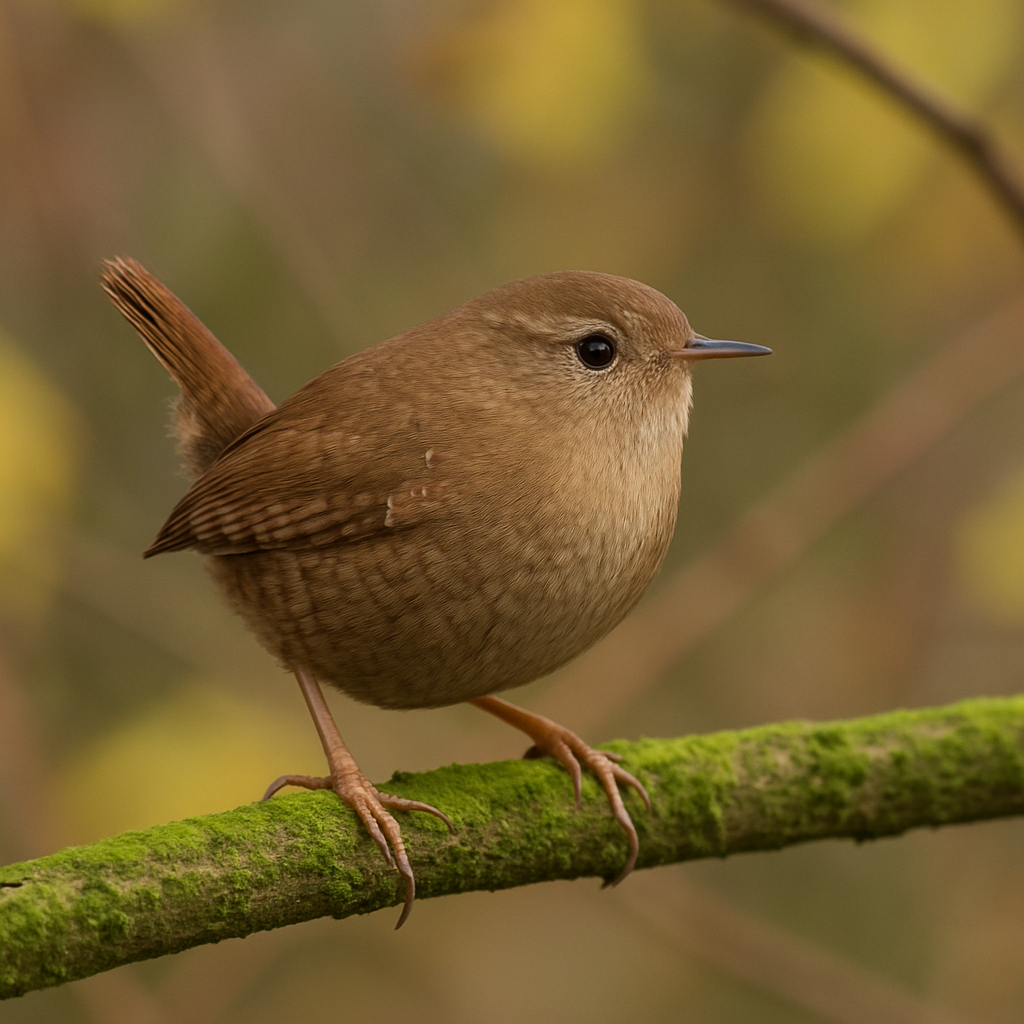
The Wren is one of the smallest yet most distinctive winter birds in Central Europe. Despite its tiny size, it has a remarkably loud voice. In winter it searches protected areas where insects can still be found—such as hedges, woodpiles, and dense undergrowth. Wrens rarely appear in the open but are often heard around gardens.
EN: Wren
NL: Winterkoning
DE: Zaunkönig
Scientific name: Troglodytes troglodytes
Identification
Size: 9–10 cm (one of Europe’s smallest birds)
Plumage:
Warm brown with fine barring
Tail often held upright
Pale eyebrow stripe
Round, compact body
Winter habitat
Dense hedges
Bushes and shrubbery
Woodpiles
Gardens with hiding places
Forest edges and undergrowth
Diet
Insects and spiders
Larvae and pupae
Small snails
Wrens eat almost no seeds, which is why they don’t frequent feeders.
They search moss, dead wood, and leaf litter for tiny prey items.
Behavior
Secretive and low to the ground
Quick, darting movements
Loud, trilling song (even in winter)
Roosts in crevices or sheltered structures
Several Wrens may share a sleeping spot in frost periods
Importance for gardens
A Wren in your garden or livestream indicates:
good habitat structure
healthy insect life
dense vegetation and shelter
Seeing one up close is uncommon, so a Wren appearance is always a special moment for viewers.
EN: Wren
NL: Winterkoning
DE: Zaunkönig
Scientific name: Troglodytes troglodytes
Identification
Size: 9–10 cm (one of Europe’s smallest birds)
Plumage:
Warm brown with fine barring
Tail often held upright
Pale eyebrow stripe
Round, compact body
Winter habitat
Dense hedges
Bushes and shrubbery
Woodpiles
Gardens with hiding places
Forest edges and undergrowth
Diet
Insects and spiders
Larvae and pupae
Small snails
Wrens eat almost no seeds, which is why they don’t frequent feeders.
They search moss, dead wood, and leaf litter for tiny prey items.
Behavior
Secretive and low to the ground
Quick, darting movements
Loud, trilling song (even in winter)
Roosts in crevices or sheltered structures
Several Wrens may share a sleeping spot in frost periods
Importance for gardens
A Wren in your garden or livestream indicates:
good habitat structure
healthy insect life
dense vegetation and shelter
Seeing one up close is uncommon, so a Wren appearance is always a special moment for viewers.