
Bohemian Waxwing
2025-12-03
The Bohemian Waxwing is a rare winter visitor from the far north. It breeds in Scandinavia and Siberia and reaches Central Europe mainly when berry supplies in the north fail. In such “irruption years,” flocks of dozens or even hundreds can appear — a remarkable event for birdwatchers.
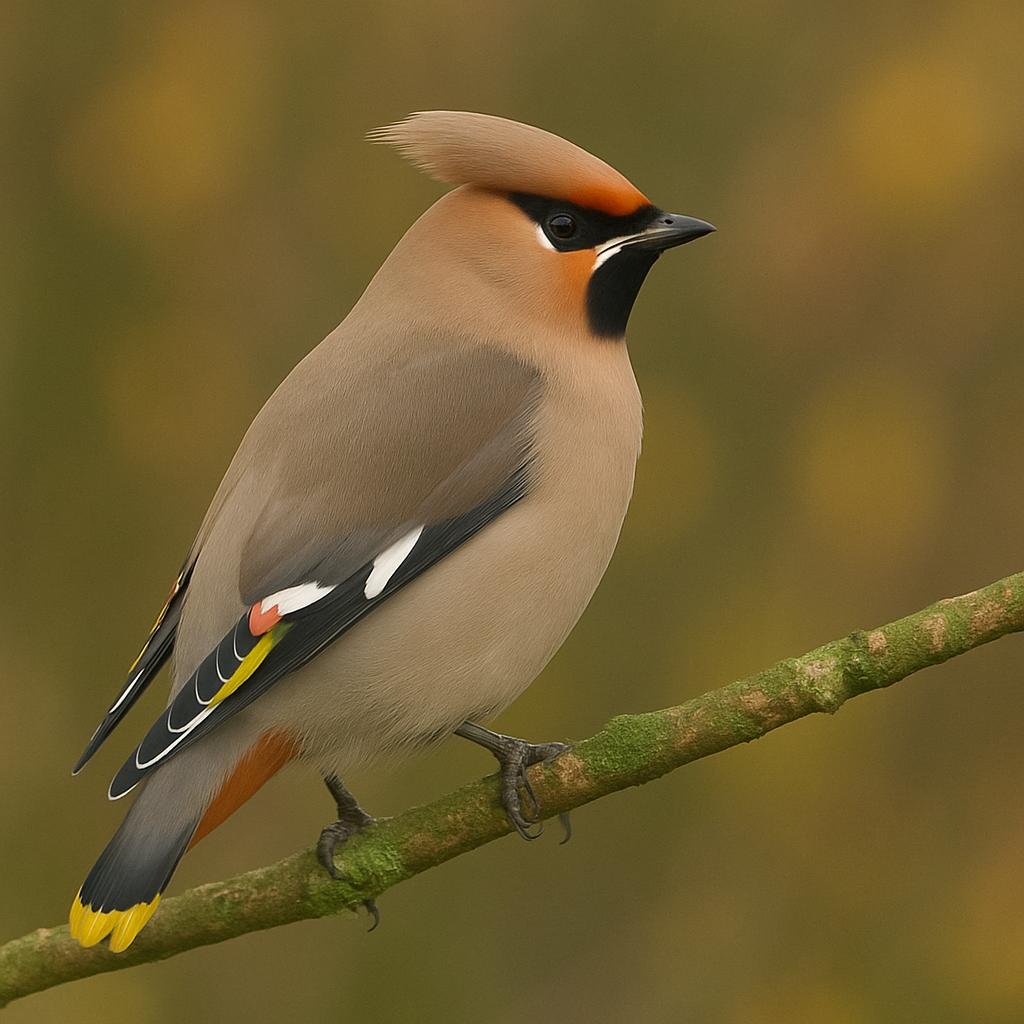
EN: Bohemian Waxwing
NL: Pestvogel
DE: Seidenschwanz
Scientific name: Bombycilla garrulus
Identification
Size: 18–20 cm
Plumage:
Silky grey overall appearance
Orange facial patch with a black eye-mask
Yellow-tipped tail
Red wax-like wing tips (“wax wings”)
Sexes: Male and female look nearly identical
Winter habitat
Gardens with berry-rich shrubs
Towns and villages
Parks and orchards
Cemeteries
Waxwings move strictly according to berry availability.
Diet
Rowan berries
Hawthorn
Sorbus species
Ligustrum
Cotoneaster
Fallen fruit (apples, pears)
They can strip a berry bush completely in a short time.
Behavior
Always in flocks
Calm, not shy
High ringing call
Often perches at the tops of trees
Feeds systematically on berry sources
Importance for gardens
A Waxwing in your garden is very rare and a major highlight for viewers.
Its presence usually indicates a northern berry failure and a corresponding winter irruption.
EN: Bohemian Waxwing
NL: Pestvogel
DE: Seidenschwanz
Scientific name: Bombycilla garrulus
Identification
Size: 18–20 cm
Plumage:
Silky grey overall appearance
Orange facial patch with a black eye-mask
Yellow-tipped tail
Red wax-like wing tips (“wax wings”)
Sexes: Male and female look nearly identical
Winter habitat
Gardens with berry-rich shrubs
Towns and villages
Parks and orchards
Cemeteries
Waxwings move strictly according to berry availability.
Diet
Rowan berries
Hawthorn
Sorbus species
Ligustrum
Cotoneaster
Fallen fruit (apples, pears)
They can strip a berry bush completely in a short time.
Behavior
Always in flocks
Calm, not shy
High ringing call
Often perches at the tops of trees
Feeds systematically on berry sources
Importance for gardens
A Waxwing in your garden is very rare and a major highlight for viewers.
Its presence usually indicates a northern berry failure and a corresponding winter irruption.